Moving to a new nation for college is a big decision that goes beyond just choosing a school or a major. The idea of leaving their loved ones behind is a big problem for many international scholars. Keeping things routine and getting emotional support from family members can make moving to a new country a lot easier. Most of the best places to study understand how important it is for families to stay together, therefore they let the primary applicant’s partner and children accompany them on their academic journey.
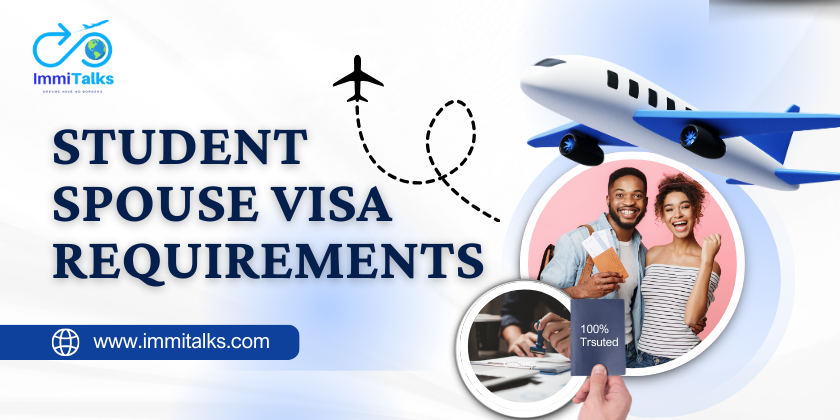
When an international student gets into a full-time program, which is usually a postgraduate or research-level course that lasts at least nine months, they can often bring their closest family members with them. This process entails going through certain student spouse visa requirements must be sure that the change is lawful and would work out financially. Immi Talks gives you this full overview to help you understand the details of the dependent visa process and the requirements for bringing your family back together in another country.
Getting to know the Dependant Visa Framework
A dependent visa is a type of immigration permit that lets the legal residents of a primary visa holder live in the host nation. In the world of education, this is often called a student visa dependency. To get a dependant visa, the student and their family members must meet strict requirements specified by the immigration authorities of the host country.
Who is a Dependant?
When people talk of dependents, they usually only mean their immediate family. The UK, Australia, Canada, and the USA all have slightly different policies, but the main group usually includes:
- The legal spouse or civil partner of the student.
- An unmarried partner (provided there is evidence of a long-term, genuine relationship, usually spanning two years or more).
- A dependent child or multiple children under 18 years of age.
It’s vital to remember that parents, siblings, or other close relatives normally don’t qualify for student dependent visas. These people could have to look into other options, such normal visitor or tourist permits, which don’t let them stay in the country for a lengthy time.
Important Requirements for 2026
For a visa application to be successful, a number of things must be in place. Immigration offices are putting more and more effort into making sure that families can take care of themselves without help from the government.
1. The Lead Applicant’s Academic Qualifications
The permission to bring dependants is no longer universal in many places. In the UK, for example, only people who are enrolled in research-based postgraduate programs or PhDs would be able to invite family members after 2026. Students in taught master’s programs usually can’t bring their spouses unless they are supported by the government.
2. Keeping and maintaining financial stability
A key part of the process is showing that you can support yourself financially. The student or partner must show that they have adequate money to pay for each family member’s living costs. These monies must typically be maintained in a bank account for a minimum of 28 consecutive days prior to the visa application date.
3. How real the relationship is
Authorities need to see proof that the relationship is “real and still going on.” This means that the link must be real and last. A marriage certificate is the most important proof for a spouse. If you have a child who depends on you, you must have a birth certificate that lists both parents.
Putting Together Your Supporting Documents
The quality and correctness of the supporting documents are very important for the success of a dependant visa request. The most common reasons for delays and rejections are missing or wrong documents.
The List for Spouses and Partners:
- Valid Passport: Every applicant must possess a valid passport with sufficient validity remaining.
- Marriage Certificate: A government-issued document confirming the legal union.
- Proof of Relationship: For an unmarried partner, this includes joint bank statements, utility bills, or tenancy agreements showing at least two years of cohabitation.
- TB Test Results: Depending on the country of origin, a tuberculosis clearance certificate may be required.
- Health Insurance: Proof of Overseas Student Health Cover (OSHC) or payment of a healthcare surcharge is often mandatory.
The list for kids who are dependent:
- Birth Certificate: A full version showing the names of both parents.
- School Enrollment Proof: If the child is of school age, evidence of arrangements for their education in the host country may be requested.
- Consent Letters: If only one parent is traveling with the child, legal consent from the non-traveling parent is typically necessary.
The Process of Applying: Step by Step
There are two main ways to go about submitting. Family members can apply at the same time as the student or they can choose to do so later.
Applications at the Same Time
Applying together is typically the best way to go. In this case, the student puts information about their partner and children on their main student visa application. This lets the immigration inspector look at the whole family at once. It also makes sure that the whole family can travel together, which gives them emotional support right away during the trip.
Later Applicants (Applying Separately)
A student may choose to travel first, find a place to stay, and then have their family join them later. In these situations, the family members apply as “subsequent entrants.” They will still have to complete all the conditions for a student spouse visa and send in a copy of the student’s current visa and enrolment status.
Dependents’ Rights and Duties
When the visa is granted, family members get certain rights, but they also have to follow tight rules.
Rights to Work and Study
Most of the time, a spouse on a dependent visa can work in popular places. But there are usually limits. For instance, they might not be able to work in some fields, like coaching sports or medical, unless they have certain certifications. Kids have the right to go to school in their area, and in many situations, they can get a free education from the state based on the level of their course.
Keeping your status
The dependant’s stay is only valid if the student gives them permission. The family frequently has to leave if the student finishes their education early or their visa is revoked. It’s important to keep all of your documents up to date and to ask for extensions before your current rights run out.
Final Ideas on How to Make the Move Go Smoothly
Getting a visa is rarely a matter of luck; it’s more about carefully following the qualifying requirements and providing clear, verifiable proof. Immi Talks says that you should start gathering your documents at least six months before you plan to travel. This allows you plenty of time to fix any mistakes in the names on a marriage certificate or to make sure your legitimate passport fits all the requirements.
Moving to another country is a brave move for a better future. By making sure you complete all the conditions for a student spouse visa, you keep your family from having to deal with the stress of being apart and give yourself a stable place to focus on your studies. Keep in mind that because of the digital revolution, many nations now give you eVisas instead of physical stickers. This implies that maintaining your digital immigration account up to date is just as vital as having your physical papers.
Having family around makes the adventure of an overseas student even better. The time you spend on your visa application is an investment in your future together, whether it’s the emotional support of a partner or the delight of seeing your kids grow up in a new country. Stay up to date, stay ready, and let your education be a tool for your whole family to see the globe.
FAQs
In a lot of places, like Australia and the UK (for graduate research students), spouses on a dependant visa can work full time. But the specific permissions depend on what level the main student’s course is at. Always read the fine print on your visa grant letter.
A marriage certificate is the most important legal document you need, but immigration officials may sometimes seek for more proof of a “genuine and subsisting” connection, such photos, joint financial documents, or proof that you travelled together.
You usually have to file for a dependant visa for your kids before they turn 18. If they turn 18 while already in the country on a dependent visa, they may be permitted to stay longer as long as they are not living on their own. However, once they turn 18, they cannot apply for a new dependency visa.
Yes. Most immigration requirements say that the student must have a certain amount of money each month to live on, plus an extra sum for their spouse and each dependent child. These monies must be available and kept for the right amount of time, which is usually 28 days.
Yes, an unmarried partner can apply as long as they can show that they have lived together in a relationship like marriage for at least two years. This needs a lot of supporting paperwork, such as pooled bank accounts and joint leases.
Sometimes, you can switch from a visiting or short-term student visa to a dependent visa while you are in the nation. It’s usually safer and easier to apply from your native country.
Yes, a government-issued birth certificate is required for all applications for dependent children to prove the parent-child relationship and to show that the child is under 18 years old at the time of the application.