
If you have decided that you want to study abroad, you need to know the international learning models well. Different countries have very different rules about how lectures are given at universities, how students are graded and how long a semester is. Without a clear breakdown of the structural realities that applicants overseas will face, navigating this web of choices can be daunting.
For those who want to expand their academic horizons, choosing a field of study is important but knowing how international classrooms work is just as important. This comprehensive guide outlines the key structures, how they work and the institutional set-ups you’ll find in the world’s top learning destinations – giving you a clear route-map for applying.
International Learning Frameworks: Underlying Philosophy
Academic institutions around the world are focusing on self-learning, continuous assessment and practical application. Some domestic models focus on memorisation and final exams, while international systems assess performance throughout the whole term.
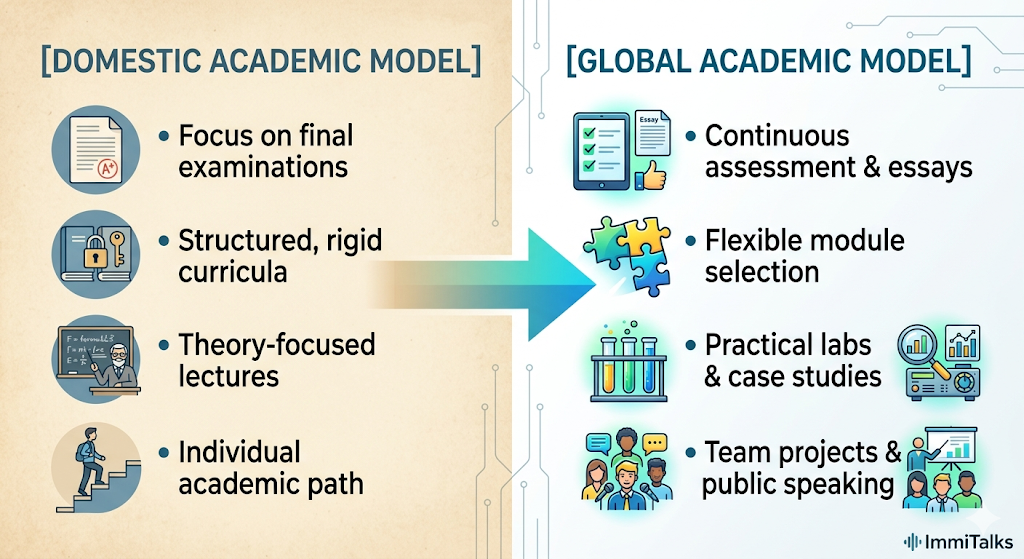
Students must change the way they study to fit this structural approach. Weekly independent research papers, group projects, and active participation in class discussions are all required of attendees.
1. Navigating Institutional Formats and Language
Higher education program names might vary from place to place, which can be confusing to applicants evaluating different possibilities.
Colleges and Universities
In North America, the terms “college” and “university” are sometimes used interchangeably, however they may refer to different institutional structures:
- Four-Year Colleges Provide undergraduate education and award bachelor’s degrees in arts or sciences.
- Research Universities: Big schools that offer a lot of undergraduate, graduate, and doctorate programs and emphasize research.
- Community Colleges: Regional centers that offer two-year associate degrees, frequently an economical bridge to a full university route.
The European Continental Model
In countries such as Germany and the Netherlands, higher educational institutions are classified into two groups:
1. Research Universities: Emphasize theoretical academic foundations, advanced research methods and intellectual development.
2. Universities of Applied Sciences (Fachhochschulen): These universities concentrate on training students for practical employment, working with regional business sectors to ensure that internships are an integral element of the curriculum.
2. Credit Systems and Formatting Systems
There are standard credit systems that are used worldwide to measure academic progress and the ability to graduate. These are pretty consistent.
The Credit Hour System in the US
Most bachelor’s degree programs require 120 credits to graduate, and master’s programs require 30 to 45 credits. The number of contact hours per week determines the course credit value.
The European Credit Transfer and Accumulation System (ECTS) ECTS is a system of measuring workload used throughout continental Europe. A standard full-time academic year is worth 60 ECTS credits, which makes it easy to transfer credits between different countries.
3. The Financial Reality: Tuition Fees and Cost of Living
Financial management is the balance between the costs of education and daily expenses. Both profiles show wide variations depending on your chosen destination and size of city.
How to Handle Your University Tuition Fees?
Tuition fees vary considerably by country and type of institution. Public university systems tend to be state funded, so they can charge less than private institutions. In many European countries public universities have very low or no tuition fees. You just pay a small semester fee for the administration and student transit pass.
Estimated Total Cost of Living
And, planning for the overall living expense is crucial apart from the academic fees. Your budget must include accommodation, food, insurance, travel and study materials. Larger cities, such as the capital or major tech hubs, generally have a higher cost of living, whereas smaller college towns provide a more affordable lifestyle.
4. Language Skills & Entry Requirements
Studying abroad requires strict immigration guidelines and proving certain language proficiencies.
Obtaining a Genuine Student Visa
To begin the student visa application, an official acceptance letter from an approved university is required. You will need to provide written evidence that you have enough money to pay for your course, and your living expenses, without the need to work locally.
English Language Skill Certification
It is an important part of the admissions process to show your readiness with the language since the instruction is in English. Standardised tests like the IELTS or TOEFL are taken by most educational institutions. Score cutoffs are competitive per program.
5. Integration into the local labour market after graduation
For many international students, a big goal is moving from study to the local professional workforce. The post-study work rules are a key component in shaping this pathway.
Placements for Experience
A lot of today’s degree programs build mandatory corporate placements or co-op terms right into the curriculum. These segments will allow you to apply classroom theory to real-world business challenges, build a professional network and enhance your resume before graduation.
Rules for Transition after Degree
Most destination countries have temporary post-study visas, allowing graduates to stay in the country to look for employment. Depending on the immigration laws of the country, getting a job matching your qualifications can lead to long-term residency.
Strategic Planning Worksheet
To reach your international study goals, you need clear, step-by-step preparation.
- 12 Months Out: Search for scholarships, confirm language proficiency requirements, and research institutional structures.
- 9 Months Out Take standardised tests and prepare academic transcripts and recommendations.
- 6 Months Out: Submit Formal Applications To Your Education Institutions Of Choice
- 3 Months to go Get your official offer letter and start student visa application process.
Summary
Understanding the unique aspects of your destination’s academic model is the first step towards a successful education system in abroad. You can choose a path that fits your long-term objectives by evaluating the institutional styles, credit systems and post-study opportunities. Strategic planning will ensure the transition to your new global classroom goes smoothly.
FAQs
Many international schools utilise constant assessment rather than a final exam. Grading is based on weekly research essays, team projects, oral presentations and mid-term tests. Constant engagement and analytical thinking, public speaking and practical application are promoted throughout the semester in this style.
Yes, international students are permitted to work part-time in most destinations, typically up to 20 hours per week during regular semesters and full-time during academic breaks. Typically, these opportunities start out as on-campus jobs, which allow students to help pay their way through school while still focusing on their studies.
The course materials, the lectures, the exams, all are in English. So universities need standardised test validation to make sure students coming on campus can fully participate. These score requirements indicate that you can handle research assignments, follow complex lectures and work effectively on group projects.
Indian students can avail various types of funding options such as merit-based institutional scholarships, state-sponsored grants, and targeted education loans. Looking into public universities in mainland Europe can also be a cost-effective choice. A large number of these universities charge low or no tuition fees for international students.
Standard student visas provide limited residence rights for educational purposes only. But after graduation, the main destinations have post-study work visas for one to three years. The extension helps the graduates to enter the local job market and gain valuable professional experience.
Terminology varies by area. In North America, colleges tend to offer undergraduate degrees, while universities offer a broad range of graduate and research opportunities. In Europe the distinction is typically between research universities , which are more theory-based , and universities of applied sciences , which provide practical , career-ready training.