If your future educational and career goals depend on a single band score, preparing for international language assessment tests can be overwhelming. The first step to studying or working abroad is best ielts coaching center helps you get structured training without unnecessary stress. ImmiTalks is a learning platform where your unique strengths are the center of learning and we make complex test requirements into simple actionable steps.
If you want to improve speaking fluency, academic writing, or learn speed reading techniques, you will see a measurable difference with the right guidance. This guide shows how to incorporate focused preparation, interactive practice, and expert mentoring to achieve your target score the first time.
Core Elements of Language Evaluation: A Summary
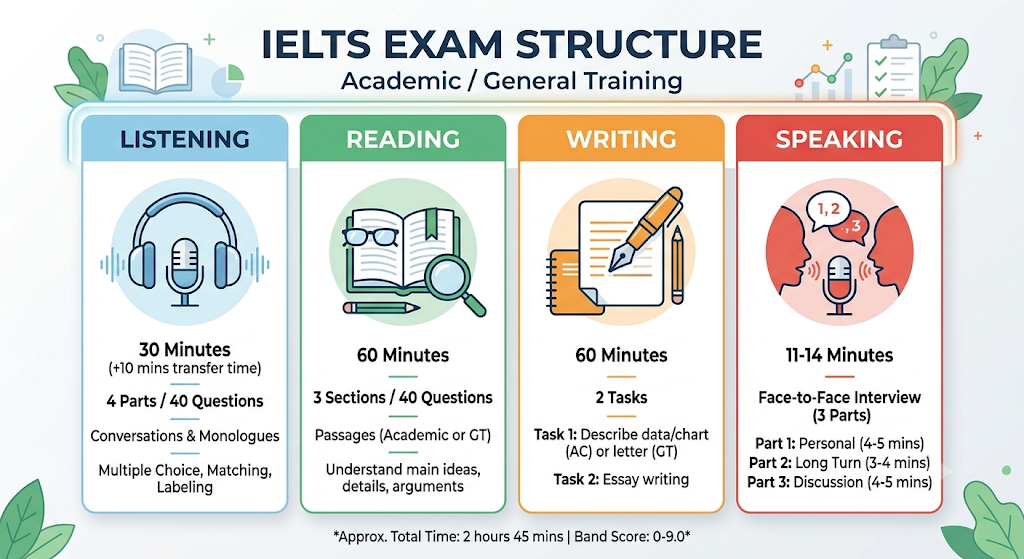
The International English Language Testing System tests four basic communication skills: Listening, Reading, Writing and Speaking. Each section tests different skills under time pressure, requiring not only language skills but strategic exam strategies.
Listening
The listening section consists of four recordings with different native speakers and accents. Candidates have to answer forty questions listening to conversations, monologues and academic discussion. Tracking multiple people speaking . * Getting specific information ( names , numbers etc ) * Staying on track across the recording .
Reading Section
The reading section contains three long texts, descriptive and factual and analytical, with tasks that test reading comprehension and the ability to identify main ideas and to scan for details under time pressure. Test takers will be tested on vocabulary and inference skills using question formats such as multiple-choice, headings matching, sentence completion and True/False/Not Given.
Writing Part
The writing section consists of two separate tasks:
Task 1 is either a description of visual information such as bar charts, line graphs, process diagrams or maps for Academic candidates or a formal/informal letter for General Training candidates.
Task 2: Needs a formal essay with an argument, solution or opinion supported by logical evidence and clear paragraphing.
Essays are marked by examiners on four criteria: Task Achievement, Coherence and Cohesion, Lexical Resource and Grammatical Range and Accuracy.
Speaking
A formal face-to-face or video-recorded interview in three parts:
Part 1 (Introduction): General questions about personal life, work, studies and interests.
Part 2 (Individual Long Turn) Give a 1 to 2 minute speech about a topic on a cue-card. You get 1 minute to prepare.
Part 3 (Two-way Discussion) Abstract questions to discuss broader issues related to the Part 2 topic.
Practical Strategies for the Academic and General Modules
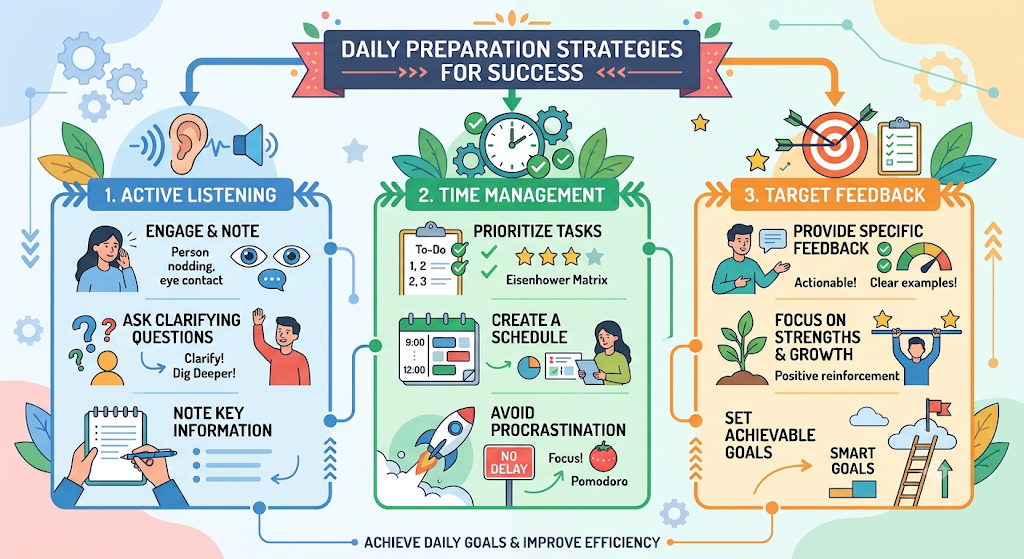
Doing well on standardised language tests is a matter of developing some practical habits for each part of the test. By practicing these focused techniques in your daily routine, you build precision and confidence for your exam.
Listening Strategies
- Answer Questions in Pauses: Use the short breaks before each audio track to read questions and highlight keywords. Consider what information you might need, like a date, time, distance or noun.
- Listen for Transitions Words like however, whereas whereas or finally are signposts. These are signs of changes in thinking or corrections of what’s been said before.
- Double Check Spelling: Easy spelling mistakes lose you marks. Watch for singular and plural forms, numbers and capital letters.
Reading Strategies
- Read Efficiently: Skim and Scan Don’t read every word the first time. Skim paragraphs for the main idea, then scan for key words, dates and proper nouns.
- Map Paragraph Topics: Write brief notes in the margins next to paragraphs. This fast index helps you get answers faster.
- Be on the lookout for paraphrasing. Test questions seldom use the same wording as the text. Look for synonyms and rephrased ideas, not exact word matches.
Writing Strategies
- Plan Before Writing : Take 3-5 minutes to write down main ideas, paragraph structures and supporting examples. A structured answer doesn’t have repetitive phrasing and unfocused arguments.
- Vary Sentences Use a mixture of simple, compound and complex sentences. Grammatical range is shown by the use of relative clauses and conditional statements where appropriate.
- Keep Accurate Word Counts: If you write less than the minimum word count (150 words for Task 1; 250 words for Task 2) you will lose marks in task achievement. Try for about 170 and 270 words respectively.
Speaking Tactics
- Expand your answers: Don’t just say yes or no. Elaborate answers with the Area method: Answer Reason Example Alternative view
- Use Natural Pausing Fillers: If you need thinking time, use natural phrases such as “That is an interesting question…” or “I have never considered that before, but…” instead of long silent pauses.
- Don’t Use Big Words, Use Clear Words: Instead of trying to stuff big words into your sentences, focus on enunciating your words clearly, with the right intonation and natural cadence.
In-Depth Comparison: Destination-Specific Score Requirements
Knowing what the destination requires helps you make your preparation goals realistic. Here’s a comparison table showing minimum band expectations for popular global destinations:
| Country | Undergraduate Admission | Postgraduate Admission | Permanent Residency / Skilled Migration |
| Canada | Overall 6.0 (No band below 6.0) | Overall 6.5 (No band below 6.0) | CLB 7 to CLB 9 (Minimum 7.0 to 8.0 per section) |
| United Kingdom | Overall 6.0 (No band below 5.5) | Overall 6.5 – 7.0 (No band below 6.0) | CEFR B2 / C1 (Overall 5.5 to 7.0 depending on visa category) |
| Australia | Overall 6.0 (No band below 6.0) | Overall 6.5 – 7.0 (No band below 6.5) | Minimum 7.0 to 8.0 in all four individual components |
| United States | Overall 6.0 – 6.5 | Overall 6.5 – 7.5 | Varies by employer and institutional visa sponsorship |
| New Zealand | Overall 6.0 (No band below 5.5) | Overall 6.5 (No band below 6.0) | Overall 6.5 minimum across General or Academic modules |
What Makes ImmiTalks Unique
Good guidance helps you reach your dream score faster and with more confidence. ImmiTalks is a top-rated best ielts coaching center. We follow methodology comprising diagnostic assessments, one-on-one mentorship and regular progress tracking.
First Diagnostic Profiling
Students start with an entry-level evaluation test. In this session we will identify your specific knowledge gaps, accent familiarity, grammatical patterns and reading speed and create a tailored study schedule.
Small Batch Size and Personal Attention
The classes are small so that the trainers can monitor the individual students’ performance. Each candidate is given time to speak and practise interactive tasks, build confidence and get immediate correction.
Practice exams
Real exam simulations help students prepare for the pressure of test day. Detailed performance analytics show growth trends on all test areas to identify areas that need to be revised.
Certified Expert Trainers
Our trainers are certified in the industry and have years of practical teaching experience. They provide constructive and focused feedback on essay structures and speaking fluency.
Flexible Online Learning Assistance
“Access to the best test preparation should be easy to work into your schedule. The best IELTS coaching online is also available for the candidates through live interactive virtual classrooms, digital practice portals and recorded strategy masterclasses, from anywhere.
You are fully prepared, no travel constraints with interactive digital whiteboards, downloadable practice resources, real-time writing corrections & flexible evening batches. Our virtual classrooms deliver the same advantages as traditional learning, with the additional advantage of being present.
Learning Frameworks That Work Across Regional Hubs
Quality test preparation requires accessible study resources in local locations. Best ielts coaching center in india ensures you get culturally tailored education, help in your local language if needed and structured teaching especially for national test takers.
For students who are studying remotely with academic schedules or working full time, enrolling for online coaching for IELTS in India gives direct access to the best instructors across cities. Flexible scheduling options allow you to maintain your learning without sacrificing your usual routine.
Review of Important Vocabulary and Grammar
Building your vocabulary isn’t just about memorising long lists of obscure words. It means knowing the context of word use, the collocation patterns, the right academic register.
Topic-based collocations
Natural fluency is improved by learning phrases, not words:
- Environment: climate change, renewable energy, sustainable development, ecological balance, environmental degradation.
- Technology: Technology, automation, digital proficiency, fast pace of innovation, cybersecurity precautions.
- Education: Academic achievement, curriculum design, higher education institutions, holistic development, vocational training.
- Society: Cultural integration, population shifts, urban development patterns, social unity, social framework.
Important Grammar Reference Points
Understanding sentence structure rules is a good way to prevent common writing errors.
- Complicated Conditionals:
Example: “If governments invested more in public transport infrastructure, congestion levels in urban areas would fall dramatically.
- Use of the passive voice:
Something like this : ” Data collected over the decade shows that a lot of money was spent on renewable energy research .
- Complex Cohesives:
Use terms like whereas, conversely, notwithstanding, in light of, and primarily due to to connect contrasting ideas smoothly.
The Ultimate Guide to Getting Ready
A good study timetable makes sure you cover every topic on the exam before the day of the test.
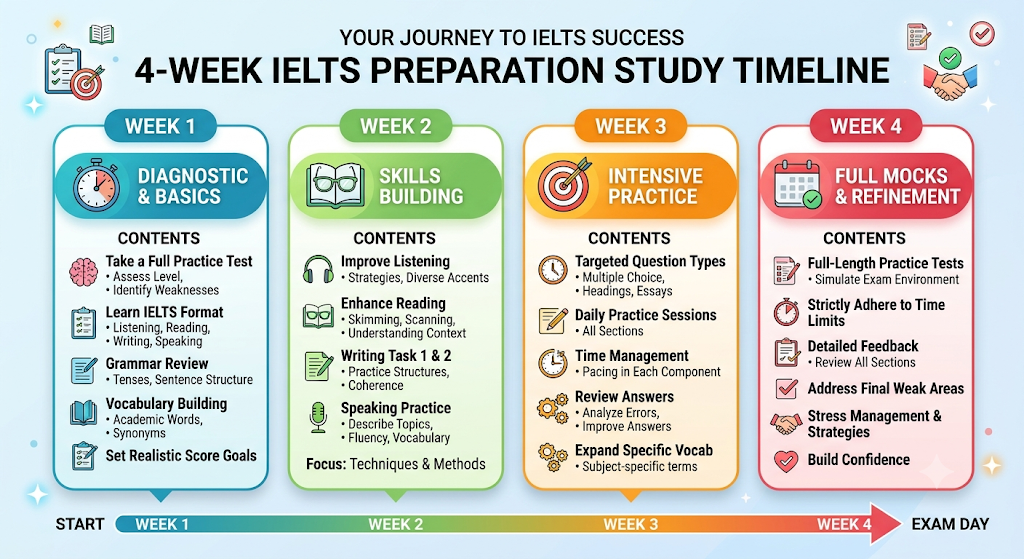
Week 1: Foundations of Skill & Diagnostic Profiling
- Take an initial diagnostic practice test to establish your baseline scores.
- Understand the exam formats, timing rules and band descriptor criteria.
- Review basic grammar rules and high frequency academic vocabulary.
Week 2: Training Specific Module
- Reading: Skimming, scanning and matching headings exercises practise.
- Full Listening exercises with different accents from around the world.
- Study graph interpretation models and prepare task 1 structures.
- Daily voice recording practice of Speaking Part 1 and Part 2 cue cards.
Week 3: Intense Practice
- Write full Task 2 essays under timed 40 minute limits. Focus on coherent paragraph structures.
- Take on tricky Reading passages with 60-minute time limits.
- Do the Listening tests in succession without pausing the audio tracks.
- Take part in mock Speaking interviews with detailed trainer feedback.
Week 4: Full-Length Practice Tests & Final Touches
- Do 3 full-length timed mock tests under realistic exam conditions.
- Review incorrect answers to find recurring mistakes.
- Time management strategies for each part of the test.
- Get a good night’s sleep before the exam so you’re mentally sharp.
Operational Checklist for Test-Day
Being organised on exam day helps to minimise stress so you can focus fully on your performance.
What to Bring
- Original Identification Document: Please bring the same and valid passport or government ID you registered with.
- Approved Writing Instruments HB pencils, erasers, clear water bottles without labels (for paper-based tests)
- Confirmation Details: Save your test booking confirmation email.
What to Expect on Test Day:
- Arrival Time: Please aim to arrive at least 45-60 minutes before your scheduled start time for identification verification and security checks.
- Belongings Storage: All mobile phones, watches, bags and electronic items must be placed in secure personal storage outside the exam hall.
- Test Sequence The written papers (Listening, Reading and Writing) are taken in one 2 hour 45 minute session with no breaks between papers.
- Speaking Appointment – The Speaking module may take place on the same day or within a few days before or after written tests, subject to venue schedules.
Final Reflections: Your First Step to Global Opportunities
The band score you are looking for makes you eligible for international academic courses and career opportunities worldwide. When you have expert mentorship, good practice materials, and a clear study schedule, exam prep isn’t a daunting unknown anymore, it becomes a structured journey.
Work on skills daily, use tested methods across all test sections and benefit from expert feedback. Contact the ImmiTalks team today to schedule your profile assessment, take a trial class for free and begin your path to international success!
FAQs
ImmiTalks provides certification for its instructors, small batch sizes, customised study materials and regular one-to-one evaluations. This structured guidance helps students to concentrate on specific weaknesses, improve their test-taking strategies and consistently get higher band scores.
The amount of time you need to prepare depends on your level of English when you start and the band score you want to achieve. Most students make big gains in 4 to 8 weeks of focused training, but those needing bigger band improvements benefit from full 12 week programs.
The Academic module is for those who are planning to go to university or get registered professionally overseas. The General Training module is for immigration, secondary education or work experience programs. Listening and Speaking modules are the same. Reading and Writing modules are different in format for each module.
Yes, live interactive online classes are as deep as physical classroom teaching. The online modules have real time trainer interaction, instant speaking feedback, access to the digital library and strategy sessions are recorded for easy revision.
The mock tests are designed to be similar to the actual test in time allowed, level of difficulty of questions and marking scheme. Regular practice helps to identify performance trends, improve time management skills and build exam confidence in a real test environment.
Most international universities require an overall band score of 6.5 to 7.0 with minimum sub-scores of 6.0 in each section. For top university programs and fields such as Medicine or Law, you may need to have an overall score of 7.5 or above.