
The decision to study abroad is a life changing decision. It’s a multi-faceted process starting from picking a destination to settling in a new campus. ImmiTalks offers a complete framework with straightforward, actionable steps to Guidance for study abroad journey in a successful way.
The First Planning Stage
“Self-awareness and thorough research are the foundation of a successful international education. You need to think about your academic goals, your career goals and your personal preferences before you choose a particular course.
How to Figure Out Your Goals
Know what you want to accomplish before you look at specific locations. Are you looking for a specialised research program, a chance to get a job internationally or to learn a new language? What you are most motivated to do will determine your choice.
Research Destinations
Benefits for international students vary from country to country.
- The United States: Known for academic flexibility and vast research opportunities.
- The United Kingdom: Offers accelerated degrees, often saving a year of tuition and living costs.
- Canada: Highly regarded for its welcoming environment and clear post-graduation work pathways.
- Australia: Excellent for practical learning, post-study work options, and an outdoor lifestyle.
- Europe: Provides many affordable or tuition-free programs taught in English.
Step-by-Step Approach to Program Selection
Don’t let yourself feel overwhelmed – break your decision making down into a manageable, structured sequence. This step by step strategy will help you not to miss any important details.
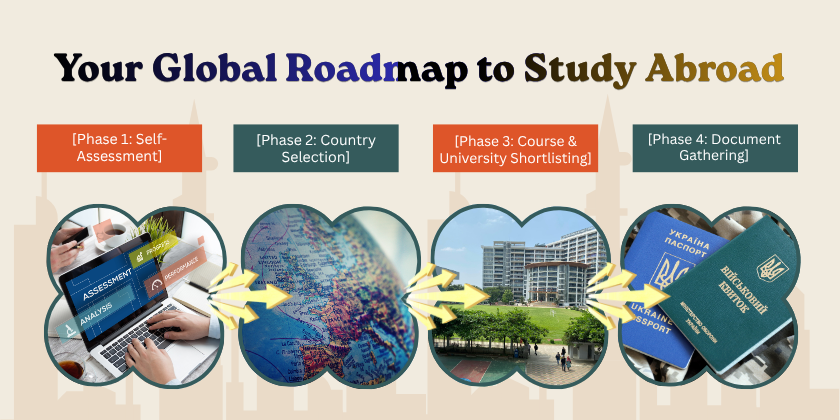
Image Source by ImmiTalks
1. Consider academic and budget constraints
Look over your existing transcripts and figure out what you can afford. This includes tuition fees, accommodation, health insurance and daily living expenses.
2. Choose Universities
Create a list of potential schools. Split your list into three groups:
- Dream Schools: Highly competitive universities where you meet or slightly fall short of the average profile.
- Target Schools: Institutions where your academic profile aligns perfectly with their average admitted student.
- Safety Schools: Universities where your credentials exceed the average requirements, ensuring a high probability of acceptance.
3. Check Eligibility Requirements
Each institution has its own entry requirements. They typically include minimum GPA requirements, specific prerequisite courses, and proof of proficiency in the language of instruction .
Understanding your university offer
After you submit your applications, institutions will review your profile. If you satisfy their requirements, you will get an official answer. You should know the different types of admission letters that you may receive.
Conditional Offerings
What is a conditional offer? A conditional offer is where the university has held a place for you but you need to meet certain conditions in order for your place to be confirmed. Typical conditions include:
- Achieving a specific final grade in your current studies.
- Submitting a higher language test score.
- Providing certified copies of physical documents.
Offers without Conditions
An unconditional offer means that you have met all academic and administrative requirements. The university has given you a full acceptance, and you can go ahead and accept the offer and make financial arrangements.
How to Confirm & Accept Your Seat
To secure your place, you’ll generally need to complete an acceptance form and pay a non-refundable tuition deposit by a certain deadline. Your seat may otherwise be offered to another applicant.
Financial assistance and funding
Studying abroad can be expensive. You should explore different funding mechanisms to sustain your global education.
Scholarships & Financial Aid
Financial assistance is awarded by a variety of institutions and external agencies on the basis of merit, financial need or special talent.
| Scholarship Type | Provider | Eligibility Basis |
| Institutional Merit | Individual Universities | High GPA, standardized test scores |
| Government-Funded | Destination Governments | Leadership potential, bilateral ties |
| Private Foundations | Corporates / NGOs | Specific fields of study, demographics |
Financial Need and Bursaries
Bursaries are mostly given for financial hardship, as opposed to merit scholarships. To qualify you will need to provide detailed documentation of your family’s income, assets and liabilities.
Student Loans Debt
International education loans can be considered if scholarships do not cover the entire cost. Look for loans with low interest rates, grace periods that extend beyond your graduation date and flexible repayment terms.
Working with the Language Test Requirements
As your courses will be taught in English (or the host country’s native language), you will need to demonstrate that you can read, write, speak and understand the language at an academic level.
Popular Language Examinations
- IELTS (International English Language Testing System): Widely accepted across the UK, Australia, Canada, and New Zealand, with growing acceptance in the US.
- TOEFL (Test of English as a Foreign Language): The traditional preference for American universities, though accepted globally.
- PTE Academic (Pearson Test of English): A computer-based test known for fast results, popular in Australia, the UK, and Canada.
Preparation Strategies
- Understand the Test Format: Every test structures its sections differently. Familiarize yourself with the timing and question types.
- Practice Active Listening: Listen to academic lectures, podcasts, and news reports from various English-speaking regions to get used to different accents.
- Write Regularly: Practice structuring essays with clear arguments, varied vocabulary, and accurate grammar under timed conditions.
How to get your student visa
Getting a letter of acceptance from a university is a big deal but you can’t travel without legal permission. The visa application process is a process of precise details.
Standard Visa Documentation Requirements
Most immigration departments require the following, though exact requirements differ by country:
- Proof of Funds: You must demonstrate that you have liquid assets to cover at least your first year of tuition and living expenses. This can be shown through bank statements, loan sanction letters, or scholarship award letters.
- Medical Examinations: Some countries require medical clearances or proof of specific immunizations before issuing a visa.
Visa Interview Advice
Many countries require a personal or virtual interview with a consular officer. The purpose of this interview is to verify your identity, determine that you are a bona fide student and also to confirm that you intend to return home or stay within local laws following the completion of your studies.
Pre-Departure and Arrival Planning
Your visa is approved and your flights are booked. The final phase is getting ready for the logistical and cultural shift of living in another country.
Lodging arrangements
Select if you wish to remain on-campus or off-campus. 4. Living in the dorms on campus is a very convenient option and can help you meet people, while living off-campus in an apartment can give you more independence and sometimes lower rates.
Setting up Finance
When you arrive, open a local bank account. Find international money transfer options to send money from home with low fees and great exchange rates.
Cultural Adjustment
Culture shock is a natural side effect of moving abroad. Give yourself time to adjust to new foods, social norms and academic expectations. This transition can be facilitated by joining student clubs, participating in orientation weeks, and accessing international student support services.
The Journey Recap
The road to international education is paved with careful planning, timely execution and clear understanding of rules. Breaking the process down into distinct stages — from your initial research to university applications, financial planning, language preparation and visa processing — can help you navigate the complexities smoothly. With proper preparation and expert advice from ImmiTalks on studying abroad, you can move ahead with confidence towards your global academic and career goals.
FAQs
International applicants generally need to submit official academic transcripts, proof of language proficiency (e.g. IELTS or TOEFL scores), letters of recommendation, a statement of purpose, and proof of sufficient financial resources for tuition and living expenses.
It is advisable to start planning 10 to 12 months before your planned intake. This timeline allows you to research institutions, prepare and take language tests, collect academic documents, secure funding and deal with the visa application process at a comfortable pace.
Yes, most of the popular destinations allow international students to work part-time, typically up to 20 hours a week during academic semesters and full-time during official university breaks. However, it is your responsibility to check the visa requirements of your host country.
This is known as a conditional offer – you are assured a place if you then satisfy specific outstanding requirements, for example if you attain a particular grade in your final examinations or gain a higher language test score. An unconditional offer means you have met all of the entry requirements and once you have accepted you are fully secured a place.
We recommend that you provide official bank statements showing available funds, approved student loan certificates, fixed deposit receipts or official scholarship letters to cover your tuition fees and living expenses for the length of time required by the immigration authorities.
ImmiTalks offers complete resources, expert insights and step-by-step guidance for students who wish to study abroad. The platform assists students in understanding university admission systems, navigating complex visa processes, exploring financial options, and preparing for life in a new country.