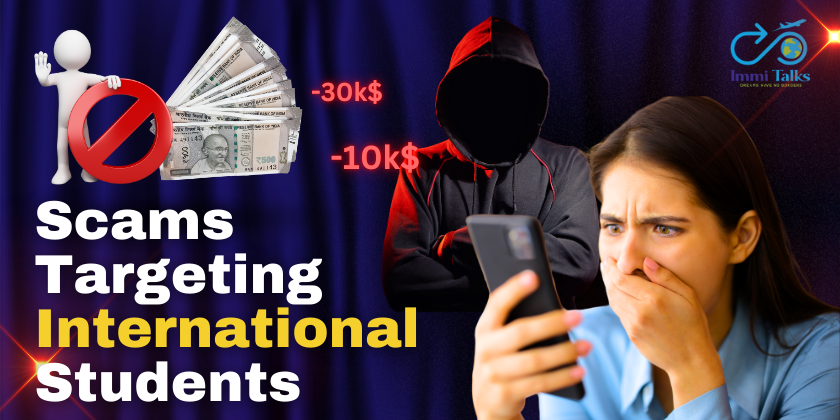
Getting into a new country to go to school is a big deal that makes you very proud. But this change typically puts you in a new position where you are still learning the rules and procedures of the area. Criminals often take advantage of this learning curve, which is unfortunate. In 2026, the sophistication of scams targeting international students has reached new levels, using AI voice cloning and digital spoofing to make people think they need to act quickly.
We at Immi Talks think that the best way to protect yourself from fraud is to learn. If you know how government institutions really work and what to look for, you can protect your money and your future. Keeping your personal information safe is not only about privacy; it’s also about making sure your status in your host nation is safe.
The Digital Growth of Advanced Fraud
Scammers don’t use basic, poorly phrased mails anymore. They utilise high-tech tools to make it look like the call is coming from a local police station or an embassy by copying official phone numbers. This method, called “spoofing,” can even change your caller ID to show the names of certain government officials.
Knowing the “Urgent Threat” Trick
Fear is a popular tool used in frauds. You can get a call saying there is a “criminal case” against you in your home country or that there is a problem with your student visa right away. The person on the other end of the queue will usually ask for money to fix the problem and threaten to arrest or deport you if you hang up.
Important: No real government official will ever threaten to jail you right away over the phone or make you wait on the queue while you move money. If you get a call like this that seems questionable, the best thing to do is hang up right away.
Scams that often happen to students
As we go into the 2026 school year, certain sorts of fraud have become common in popular study places like the US, UK, Canada, and Australia.
1. The “Government Official” Impersonator
In this scenario, fraudsters pretend to be from government agencies such as the IRS, USCIS, or the Home Office. They claim you owe “back taxes” or “visa fees.” They frequently ask for payment via gift cards, cryptocurrency, or a wire transfer.
- The Reality: Real agencies never accept gift cards as a form of legal payment. They communicate through official mail and provide formal tracking numbers for any debt.
2. The “Too Good to Be True” Housing Scam
Finding affordable housing is a major challenge for international students. Scammers post beautiful apartment listings on social media or rental sites at prices that are good to be true. They ask for a security deposit via wire transfer before you have seen the property in person.
- The Reality: Never send money for a flat you haven’t physically walked through. Scammers often use stolen photos from legitimate real estate websites to lure victims.
3. The “Virtual Kidnapping” Extortion
This is one of the most distressing scams targeting the community. Scammers call a student and trick them into isolating themselves (turning off their phone). They then contact the student’s family in their home countries, claiming the student has been kidnapped and demanding a ransom.
- The Reality: Always maintain a “safe word” with your family. If they receive such a call, they should try to contact your university’s international office or local police before sending any funds.
Digital Safety: Keeping Your Bank Account Safe
The main things they want are your bank account and personal information. If a criminal gets your Social Security Number or national ID, they can steal your identity and it can take years to fix.
How to Spot a Fishy Email
Be careful with email addresses that look official but include small mistakes, such “support@gov-uk.org” instead of a “.gov.uk” domain. A link in a suspicious email often takes you to a bogus login page that is meant to steal your information.
- Tip: Hover your mouse over any link to see the actual destination URL before clicking.
Guarding Your Data
- Never share your login details or “one-time passwords” (OTPs) with anyone.
- Be cautious about what you post on social media. Scammers use your public posts to find out which university you attend and who your friends are, making their lies more believable.
How to Stay Safe from Scams and Take Action
You are not alone if you think you are being targeted. There are already set up ways to help you avoid scammers and get your money back.
Step 1: Verification
If someone claims to be a government official, ask for their name and badge number. Hang up and call the official number of the agency found on their “.gov” website. Do not use the redial feature on your phone, as it may lead back to the scammer.
Step 2: Report the Incident
Reporting is essential to stop these criminals from finding new victims.
- In the US: Contact the Federal Trade Commission (FTC) via their online portal.
- In the UK: Report to Action Fraud.
- At School: Always inform your International Student Advisor. They are trained to handle these situations and can provide emotional support.
Step 3: Secure Your Accounts
If you have already shared your bank account details, contact your financial institution immediately to freeze your cards and monitor for unauthorized transactions.
The Immi Talks Promise to Keep You Safe
Going to college abroad is a brave trip. Scams that target overseas students are a genuine problem in 2026, but they don’t have to ruin your time there. You may focus on what really matters—your academics and your future career—by being wary of unsolicited calls and keeping your personal information safe.
FAQs
The most common types of calls are “Government Impersonation” (IRS/Immigration), “Rental Fraud” (false flat listings) and “Virtual Kidnapping” (extorting families). Scammers often utilise AI to fake phone numbers and make people feel really urgent.
Real government agency will never phone you out of the blue and ask you to pay them with gift cards or a wire transfer. They won’t ever threaten to deport you right away over the phone. If someone is rude over the phone or demands for your bank account number, it’s a fraud.
Don’t click on any links or give up any personal information. Carefully look at the email addresses of the sender. If it doesn’t finish in a government domain, like .gov or .gov.uk, get rid of it. If you’re not sure, send the email to your university’s international office to check.
Scammers enjoy gift cards because they work like cash. Once you give them the code on the back, the money is gone right once and is very hard to track or get back. No business or government will ever ask you to pay this way.
Yes. You should call the police in your area and the Federal Trade Commission (FTC) in the US, or the equivalent in your host country, right away. Getting your money back is hard, but your complaint helps the police find the criminals.
It is very bad advice. Scammers use social media to gain phone numbers and other personal information so that their scams that target students seem more authentic and intimate. To help avoid scammers, keep your contact settings private.
Immi Talks keeps you up to date on the newest security protocols and fraud trends. We work with lawyers and government authorities to make sure you get the most up-to-date information on how to spot and avoid the most frequent scams in 2026.