Studying a degree abroad is a life changing experience, broadening your personal horizons and supercharging your global career. But the road from touring potential campuses to unpacking your bags in another country is littered with complicated hurdles. Applicants often face changing immigration policies, complex transcript evaluation processes, and confusing requirements for financial proof. Your step-by-step, one-by-one roadmap.This study abroad blog takes a confusing bureaucratic maze and turns it into a clear, manageable plan. Immi Talks breaks down the basics of international admissions, enabling you to make informed decisions in line with your long-term career aspirations.
Charting the Global Academic Landscape
The international education market has shifted towards destinations that offer a distinct balance of academic excellence, affordable tuition and realistic post-study work opportunities. Although established hubs such as the United States and the United Kingdom remain highly regarded, regions such as Central Europe, Canada and Australia have revised their entry frameworks to attract top-tier global talent.
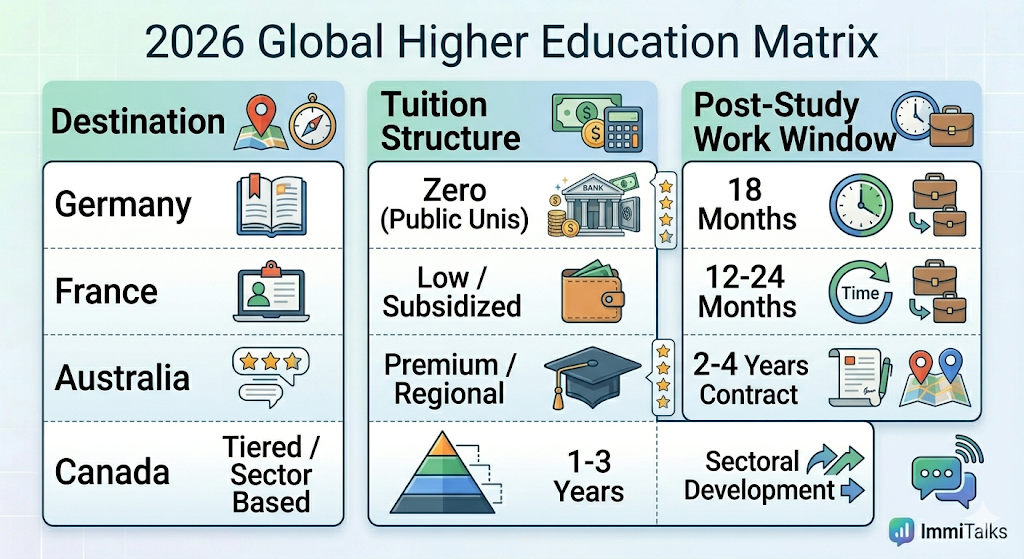
When deciding on where to go, it’s important to look beyond just university rankings. You must analyze the specific ecosystem of your target country. For example, if you are an expert in automotive engineering or renewable energy, then it makes a lot of sense to look at countries with a strong industrial manufacturing base. If you’re interested in digital finance or software architecture, on the other hand, the best internship pipelines are going to be in the cities with the best technology startup cluster. Your academic major should be aligned with the regional market demands to make a smooth transition from graduation to full-time employment.
Decoding the Academic Assessment and Credentials Labyrinth
One of the most common problems for international students happens during the first document review process. Overseas admissions boards cannot just take local high school marks or regional college transcripts at face value. They need to authenticate your credentials and convert your grades into local equivalent scoring models.
For instance, students heading for European hubs typically go via specialized verification agencies such as Uni-assist or are required to undergo Academic Evaluation Centre (APS) inspections. These procedures ensure that your local graduation certificates meet the strict entry requirements of your destination. If you are missing a single verified seal or submit a transcript outside the official window, you can be rejected outright. Our articles are intensely focused on these technical timelines so you can get your academic portfolios compiled accurately and avoid expensive processing delays.
Financial Evidence and Compliance Management
Your financial independence is a huge pillar of any international student visa application. Immigration offices want to see rock-solid proof that you can pay your tuition and living expenses without tapping into the local welfare system.
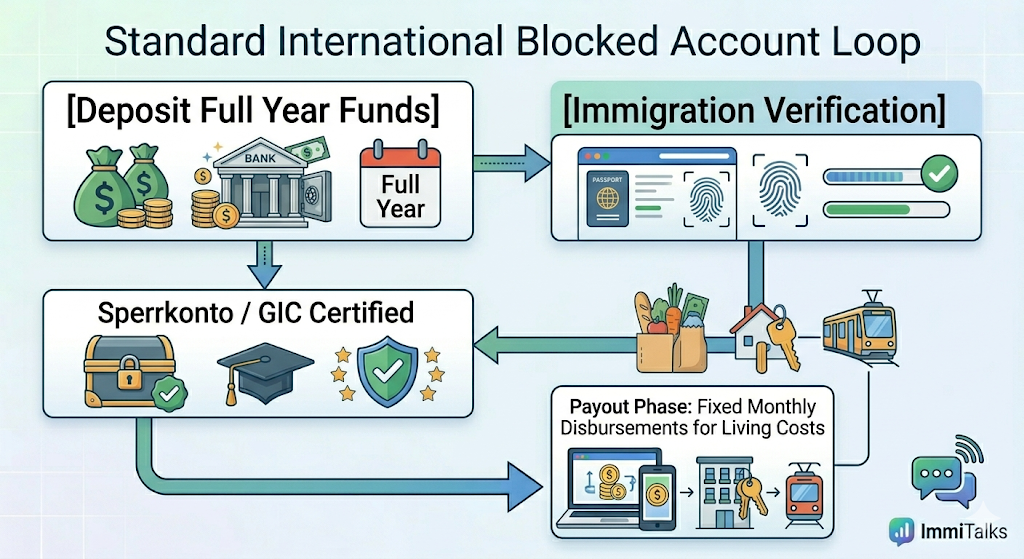
The structure for financial verification differs between countries. In some countries, this means opening a special locked bank account, either a Sperrkonto or a Guaranteed Investment Certificate (GIC). Before leaving your home country, you have to deposit a government required amount into the account. When you reach your destination, the bank provides you a fixed amount each month from these funds to pay your rent, grocery bills and mandatory health insurance.
Managing this paper trail requires some planning. Sudden, unexplained cash deposits into your personal accounts can trigger automated fraud reviews by Consular Officers. The guides on our platform help families to plan these transfers properly and ensure that all the financial paperwork complies with the strict rules of immigration inspection.
Conquering the Strategic Visa Interview
The face-to-face consular interview is the last step between the acceptance letter you receive from a university and a seat in a lecture hall. This is not a standard document drop-off. This is an assessment of your academic intent, language communication skills, and financial transparency.
In this conversation, the consular officer is attempting to establish that you are a genuine student and not an economic migrant using an educational route as a way to get across borders. You should have a clear explanation of what inspired you to apply to the program, how it aligns with your previous education, and the career paths you wish to pursue after graduation.
If you have gaps of several years in the history of your studies, be sure to explain these periods in a positive way by emphasizing the professional skills you have developed. So practicing with structured mock interview outlines will help you handle these high pressure questions naturally and your spoken answers also will be in line with your written statements perfectly.
Make the Most of Your Campus Life and Your Professional Network
Your international education journey does not end after you clear the airport immigration. Changing campuses means adjusting to new academic patterns, cultural settings, and community contexts. As opposed to numerous local systems that depend greatly on memorization, global universities emphasize independent research, collaborating in teams, and addressing practical problems.
1. Academic Adjustment (Research and Seminars)
2. Local Integration (Language & Culture Mix)
3. Professional Structure (Internships/Employment)
4. EU/Global Long-Term Career Placement
You should also consider part-time work opportunities, corporate internships and campus research positions, to make the most of your investment in your education. Most countries permit international scholars to work a specified number of hours per week during the semester. These jobs will cut your daily costs, and offer you some perspective on the local working culture. It is also crucial to develop a robust professional network by utilizing university career centers and attending industry workshops, which can be instrumental in landing a full-time job before your post-study visa period ends.
Immi Talks Information Hub: Trustworthy Information For You
International admissions is a very fast moving world. Immigration thresholds keep moving, language certification rules keep changing, and university application portals keep changing their interfaces every season. Relying on out-of-date forum advice or second-hand rumours can compromise your entire relocation strategy.
This study abroad blog is full of accurate, well-verified information from licensed immigration analysts and international education specialists. We monitor embassies around the world every day for policy changes, translating complicated legal language into simple, actionable recommendations. Our content is very practical, with checklist templates, patient case studies and step-by-step software walkthroughs.
Trusting our verified data updates to help you plan saves you time, reduces your stress and protects your family’s financial investments. Let our professional research give you a unique edge, turning your global learning dreams into an orderly, successful reality. Explore our comprehensive library of country guides today and begin crafting your personalized campus life journey.
FAQs
We update our primary guide pathways as soon as global immigration departments or university boards announce official policy changes. Our editorial team scours embassy statements every day to bring you the latest financial targets, visa rules and application deadlines.
The majority of public institutions providing zero tuition will necessitate an excellent academic record that meets the standards of their local secondary school, official credential verification from recognized bodies, as well as proven language proficiency (such as IELTS, TOEFL, or native language certificates depending on the track).
What is a blocked account? A blocked account is a mandatory bank account in which you must deposit a government-specified amount of money to cover your living expenses for an academic year. The bank will hold this money and after you arrive will release a fixed amount each month, showing immigration officers that you can support yourself without working illegally.
Once there , changing your study course is very complicated and subject to the immigration rules of that country . At many locations, your student visa is legally tied to the university you attend and the major you are studying. A change of course is generally a new application to the local immigration department.
The ideal lead-time for preparation is between nine and twelve months before the intended date of entry. This longer timeframe gives you plenty of time to get your language tests, get official academic evaluations, collect your financial records, and complete your visa files without feeling rushed.
Professional advisor input can be helpful in providing structure, but many students complete their applications themselves using up-to-date, authoritative resources. Our comprehensive blog posts offer exactly the checklists, portal guides and documentation tips you need to successfully navigate the whole process yourself.